
- 1. What is a social media algorithm?
- 2. How do social media algorithms decide what to show?
- 3. Does the Instagram algorithm control your reach?
- 4. The algorithm cannot create interest
- 5. What signals tell an algorithm that content is valuable?
- 6. Why does social media reach fluctuate?
- 7. Should businesses create content for the algorithm?
- 8. Five things to check before blaming the algorithm
- 9. Five things to check before blaming the algorithm
- 10. Does posting consistently improve reach?
- 11. Can hashtags, trending audio and posting times improve reach?
- 12. How can businesses improve social media reach?
- 13. So, does the social media algorithm matter?
- 14. Build a social media strategy around your audience
Does the Social Media Algorithm Really Matter for Businesses?

When a social media post underperforms, the algorithm is often the first thing blamed. Reach has fallen. Engagement is inconsistent. A post that took hours to create appears to disappear within minutes. It can feel as though Instagram, LinkedIn, TikTok or Facebook is actively working against your business. But does the social media algorithm really deserve all the blame? The answer is more balanced than a simple yes or no.
Social media algorithms matter because they influence who sees your content, when it appears and how widely it is distributed. But an algorithm cannot make unclear, generic or irrelevant content valuable to your audience.
For businesses, this distinction is important. Improving social media performance is rarely about discovering one hidden trick. It is about understanding how content is distributed, why people respond to it and how each post supports the wider marketing journey.
1. What is a social media algorithm?
A social media algorithm is a system that ranks and recommends content based on what a platform believes each person is most likely to find relevant. There is not one universal algorithm operating across every platform. Instagram, Facebook, TikTok, LinkedIn and YouTube use different systems for different parts of their platforms. A feed, search page, Stories section, Explore page and Reels tab may each rank content differently. The basic purpose is similar: To decide which content is most likely to interest each user. Two people can open the same platform at the same time and see entirely different posts because their recommendations are influenced by their own activity, interests and relationships.
2. How do social media algorithms decide what to show?
Social platforms use a range of signals to predict whether someone may be interested in a post.
These can include:
● The accounts and subjects a person regularly interacts with
● Posts they have previously liked, saved, shared or commented on
● Videos they watch and how long they watch them for
● Their previous relationship with the account publishing the content
● Information about the post, including its subject and recent popularity
● How other users are responding to the post
● Whether the content is eligible to be recommended
Instagram, for example, says suggested posts can be influenced by a person’s activity, their connection with an account, information about the post and previous interactions with the publishing account. Its feed-ranking system also predicts how likely someone is to take actions such as liking, saving, tapping or watching a post.
This means an algorithm is not simply asking:
Is this a good post?
It is attempting to answer:
How likely is this particular person to care about this particular post?
3. Does the Instagram algorithm control your reach?
The Instagram algorithm influences reach, but it is not the only factor affecting performance. Instagram may recommend eligible content in Feed, Explore, Search and Reels to people who do not already follow the account. However, being eligible for recommendations does not guarantee that a post will be widely distributed.
This is why following every supposed “algorithm rule” does not guarantee strong results. Two businesses can use the same format, publish at the same time and include similar hashtags, yet achieve very different outcomes. One may be addressing a real customer problem. The other may simply be posting because the content calendar says something needs to go out. The format may be similar, but the audience value is not.
Reach can also be affected by:
● The relevance of the subject
● The strength of the opening hook
● How quickly the value becomes clear
● The format of the post
● Watch time and audience retention
● Saves, shares and other interactions
● The account’s relationship with its audience
● Competition from other content
● Recommendation eligibility
● The quality and clarity of the creative execution
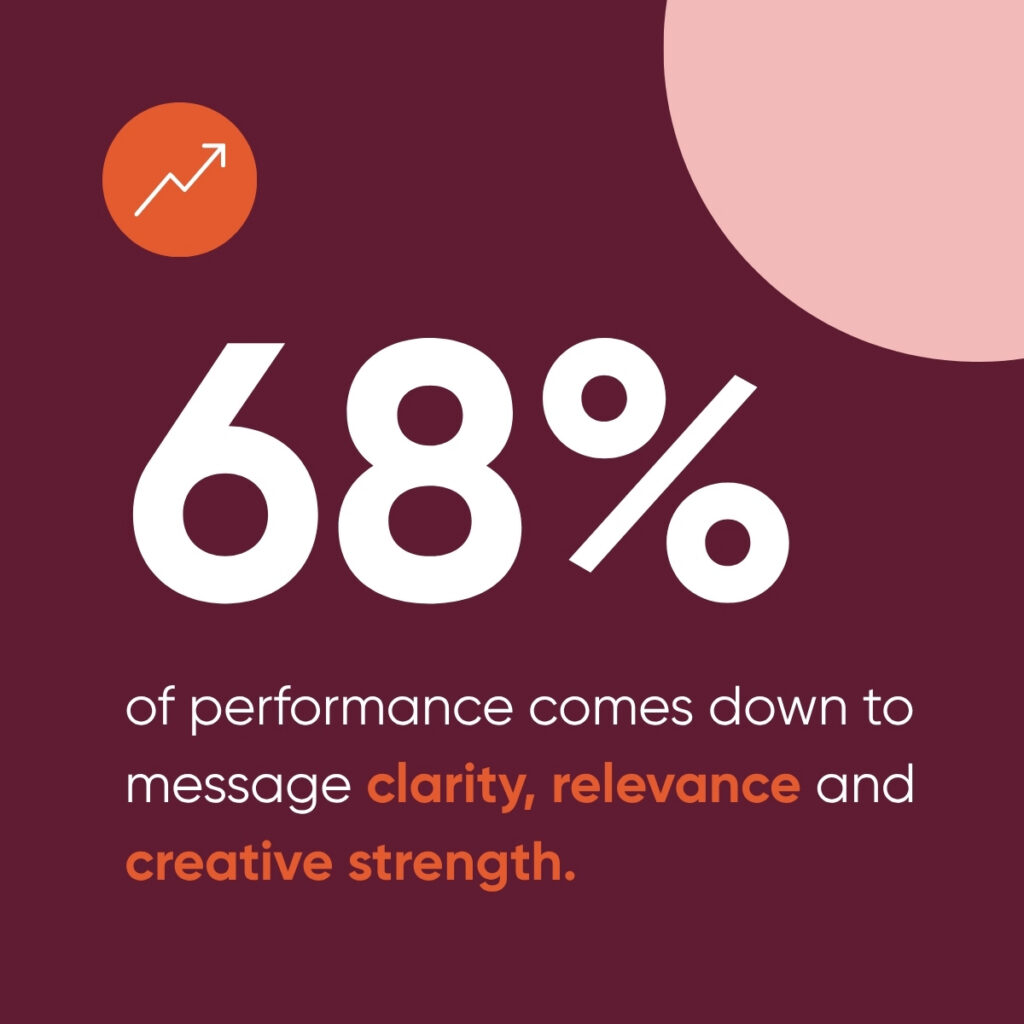
4. The algorithm cannot create interest
This is where many businesses become distracted.
They focus on:
● Finding the perfect posting time
● Using trending audio
● Choosing the right number of hashtags
● Publishing at a specific frequency
● Following the latest platform rumour
● Copying a format that performed well for someone else
These factors may influence distribution, but they cannot compensate for an idea that gives the audience no reason to stop. The algorithm can distribute a post. It cannot make an unclear message easy to understand. It cannot make generic advice feel insightful. It cannot create trust where no expertise is demonstrated. It cannot make someone share a post that offers them nothing useful, interesting or worth discussing. Before blaming the algorithm, businesses should assess the content itself.
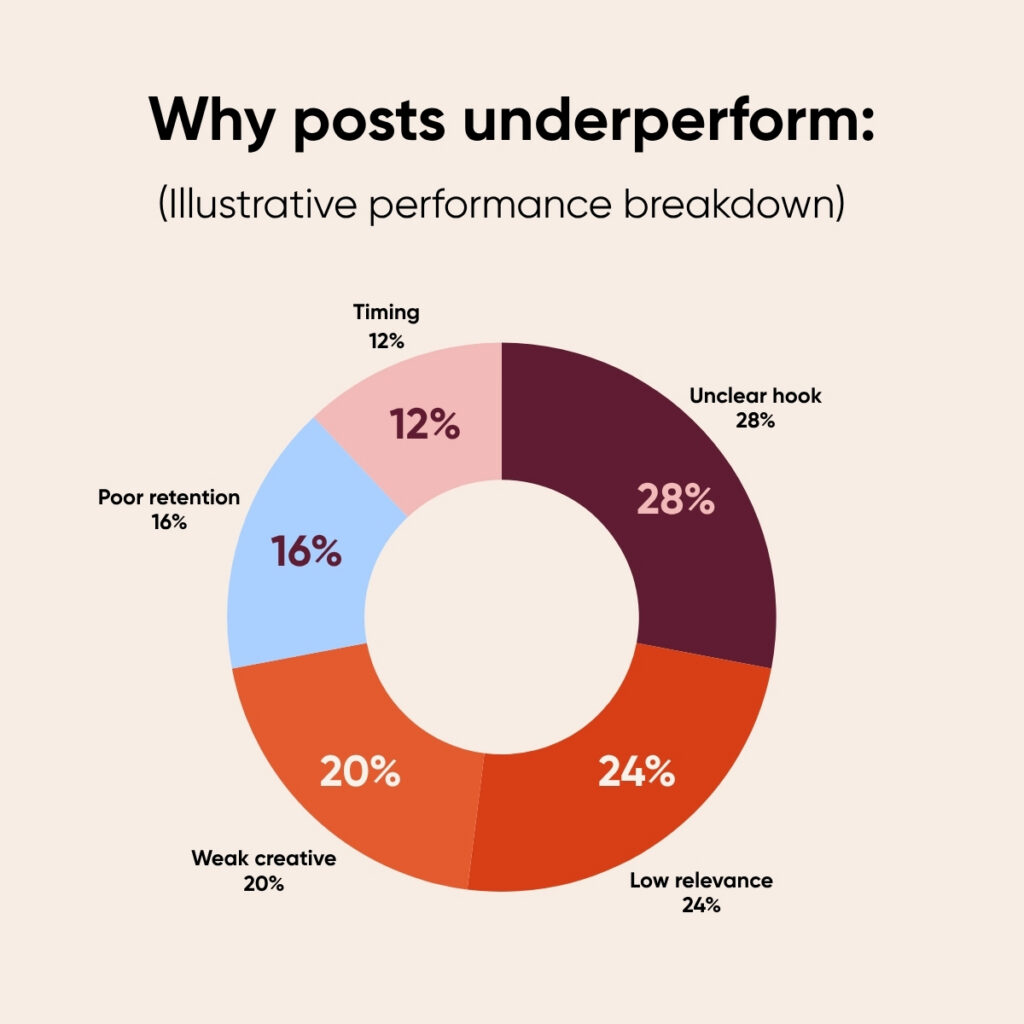
5. The algorithm cannot create interest
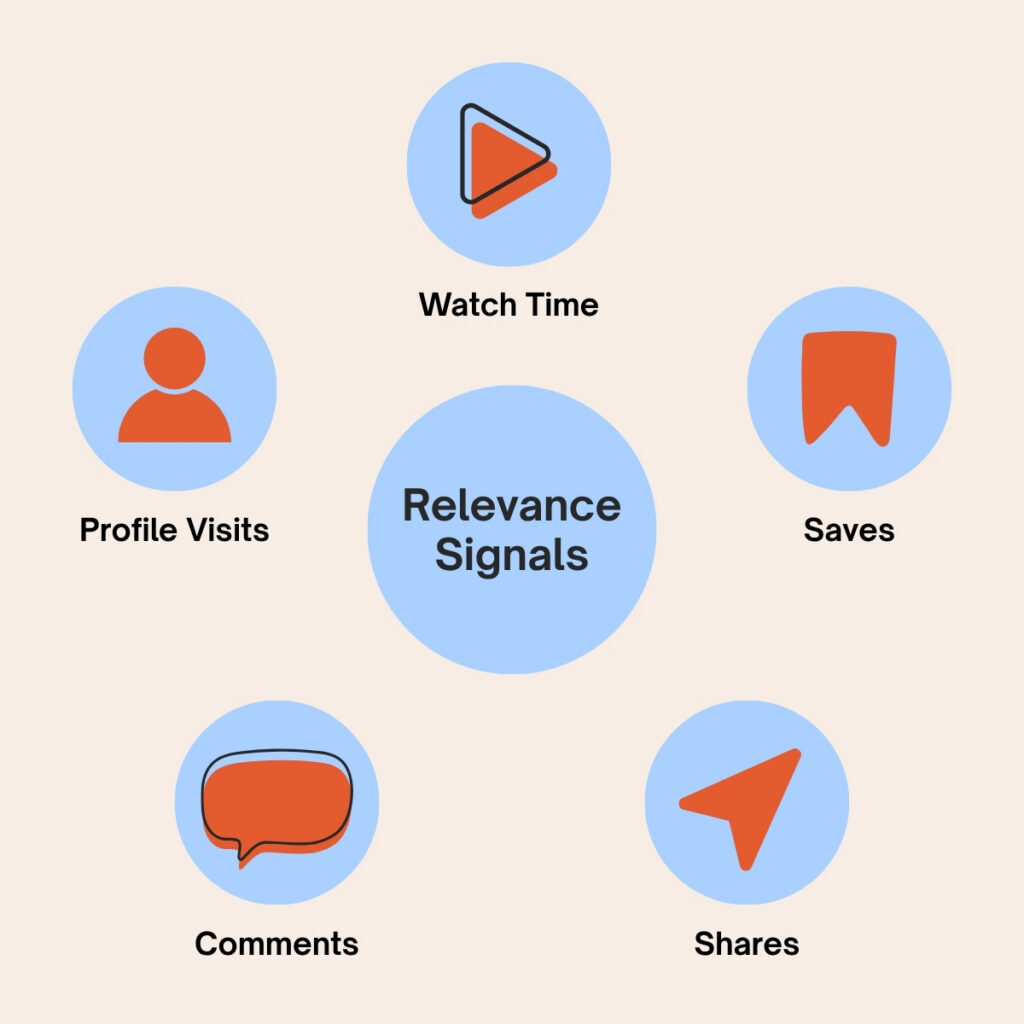
Algorithms learn from how people respond to content. When someone stops scrolling, watches a video, reads a caption, swipes through a carousel, saves a post or shares it, they provide a signal that the content may be relevant. However, businesses should not reduce success to likes alone.
A post with relatively few visible interactions may still lead to:
● A potential customer visiting the profile
● A website visit
● Someone saving the advice for later
● A useful conversation in the comments
● A direct message from a qualified prospect
● An email enquiry
● Greater recognition when the business is recommended
● A future sales conversation
6. Why does social media reach fluctuate?
Even strong content will not perform identically every time. Social feeds are competitive and personalised environments. A business post may be ranked alongside content from friends, creators, publishers, competitors and advertisers. The audience may also have seen similar subjects recently or be more interested in another topic that day.
Performance can change because of:
- Audience behaviour
- Topic relevance
- Timing
- Competing content
- Creative format
- Content fatigue
- Recommendation settings
- Platform changes
- The strength of the business’s existing audience relationship
One weak post does not necessarily mean the strategy has failed. Equally, one unusually successful post does not automatically provide a repeatable strategy. Businesses should look for patterns across several weeks or months rather than reacting to every individual rise or fall.
7. Should businesses create content for the algorithm?
Businesses should understand the algorithm, but they should create content for the people the
algorithm is trying to serve.
That means beginning with the audience.
Ask:
● What are our customers currently trying to understand?
● What problems are regularly raised in sales conversations?
● What mistakes could we help people avoid?
● What decisions are customers struggling to make?
● What does our team know from experience?
● What questions are people searching for?
● What would someone find useful enough to save or share?
● What could we explain more clearly than our competitors?
This is where stronger social media content usually begins. For a construction company, that may be an explanation of how unresolved design decisions affect a project programme. For a hospitality business, it could be content that helps someone decide where to eat, stay or spend an afternoon. For a professional services company, it may be a clear answer to a question clients are often unsure how to ask. The idea does not need to be revolutionary. It needs to be relevant, specific and useful.
8. Five things to check before blaming the algorithm
Before assuming that poor performance is caused by the platform, assess the following five areas.
Is the topic relevant to the right audience?
Publishing regularly will not improve performance if the subjects feel disconnected from the people the business wants to reach.
A useful topic should connect with a real:
● Problem
● Question
● Concern
● Ambition
● Decision
● Frustration
● Misunderstanding
Start with customer conversations, enquiry forms, search data, sales objections and frequently asked questions. These sources are often more useful than a generic list of trending content ideas.
Is the value clear immediately?
People make fast decisions while scrolling. The opening image, headline, caption or first few seconds of a video should make the reason to continue clear.
Compare:
Some thoughts on marketing consistency.
With:
Posting consistently will not help if your message keeps changing.
The second opening introduces a problem and gives the audience a reason to continue. A strong hook should not mislead people. It should clearly communicate the tension, question or benefit within the content.
Does the content offer something specific?
General advice is easy to ignore. Specific observations, examples and experiences demonstrate greater understanding.
Compare:
Communication is important in construction.
With:
One unresolved design decision can delay several trades, force work to be resequenced and create additional costs elsewhere in the programme.
The second version gives the audience something tangible to understand and remember. The same principle applies across industries. Specific content is more likely to demonstrate genuine expertise because it shows how a problem appears in practice.
Is the content easy to consume?
A strong idea can still be weakened by poor presentation. Content should be designed for the way people use each platform.
That may mean:
● Shorter paragraphs
● Clear subheadings
● Readable on-screen text
● A strong carousel cover
● Captions on videos
● Purposeful imagery
● A clear visual hierarchy
● Removing unnecessary introductions
● Reaching the main point sooner
Do not make the audience work harder than necessary to understand the value.
Does the post support the wider marketing journey?
A social media post rarely completes an entire sale by itself.
Its role may be to:
● Introduce the business
● Create recognition
● Demonstrate expertise
● Answer an early question
● Challenge an assumption
● Build trust
● Encourage a profile visit
● Direct someone to a case study
● Support a later sales conversation
Social media should therefore connect with the rest of the business’s marketing. A post may attract attention, but the profile, website, reviews, email communication and sales process all influence what happens next.
9. Which social media metrics should businesses monitor?
The best metrics depend on the purpose of the content.
For awareness
Monitor:
● Reach
● Non-follower reach
● Video views
● Profile visits
● Follower growth
For content relevance
Monitor:
● Saves
● Shares
● Comments
● Carousel completion
● Average watch time
● Video retention
For conversion
Monitor:
● Enquiries
● Bookings
● Sales conversations
● Qualified leads
● Proposals
● Revenue influenced by social media
A business should not assess an educational carousel, a client case study and a direct sales post using exactly the same measure. Each has a different role.
10. Does posting consistently improve reach?
Consistency can support recognition and provide more opportunities to learn what resonates with an audience. However, consistency does not mean publishing as often as possible. Three relevant and distinctive posts can be more valuable than five rushed posts that repeat information the audience has already seen.
A consistent social media strategy should include:
● Recognisable themes
● Clear key messages
● A repeatable tone of voice
● Relevant audience problems
● A balance of expertise, evidence and personality
● Consistent visual recognition
● Enough variety to remain interesting
Businesses do not need to invent an entirely new message every week. They need to communicate what they stand for clearly enough and frequently enough to become recognisable.
11. Can hashtags, trending audio and posting times improve reach?
Hashtags, audio choices and posting times can support content distribution, but they should not
be treated as the foundation of a social media strategy.
Hashtags
Relevant hashtags can help categorise a post and provide context, but broad or unrelated
hashtags are unlikely to repair weak content.
Trending audio
Audio may help a Reel feel familiar or timely, but the video still needs a clear idea, useful
message or engaging story.
Posting times
Publishing when the audience is active may help generate an early response, but there is no universal time that guarantees performance for every business. These elements should be treated as supporting decisions.
The main factors remain:
● The quality of the idea
● Audience relevance
● Creative execution
● Clarity
● Retention
● Trust
● Distribution
● The wider customer journey
12. How can businesses improve social media reach?
To improve relevant reach, businesses should:
- Build content around genuine customer questions.
- Make the main value clear within the opening seconds or first line.
- Use specific examples rather than generic advice.
- Create content people have a reason to save or share.
- Review retention, not only views.
- Check recommendation eligibility and account status.
- Build relationships through meaningful community engagement.
- Repurpose strong ideas across suitable formats.
- Connect social media with the website, email and sales process.
- Review results over a meaningful period rather than reacting to individual posts.
The aim should not be reach at any cost. It should be reaching more of the people who are likely to value, remember or buy from the business.
13. So, does the social media algorithm matter?
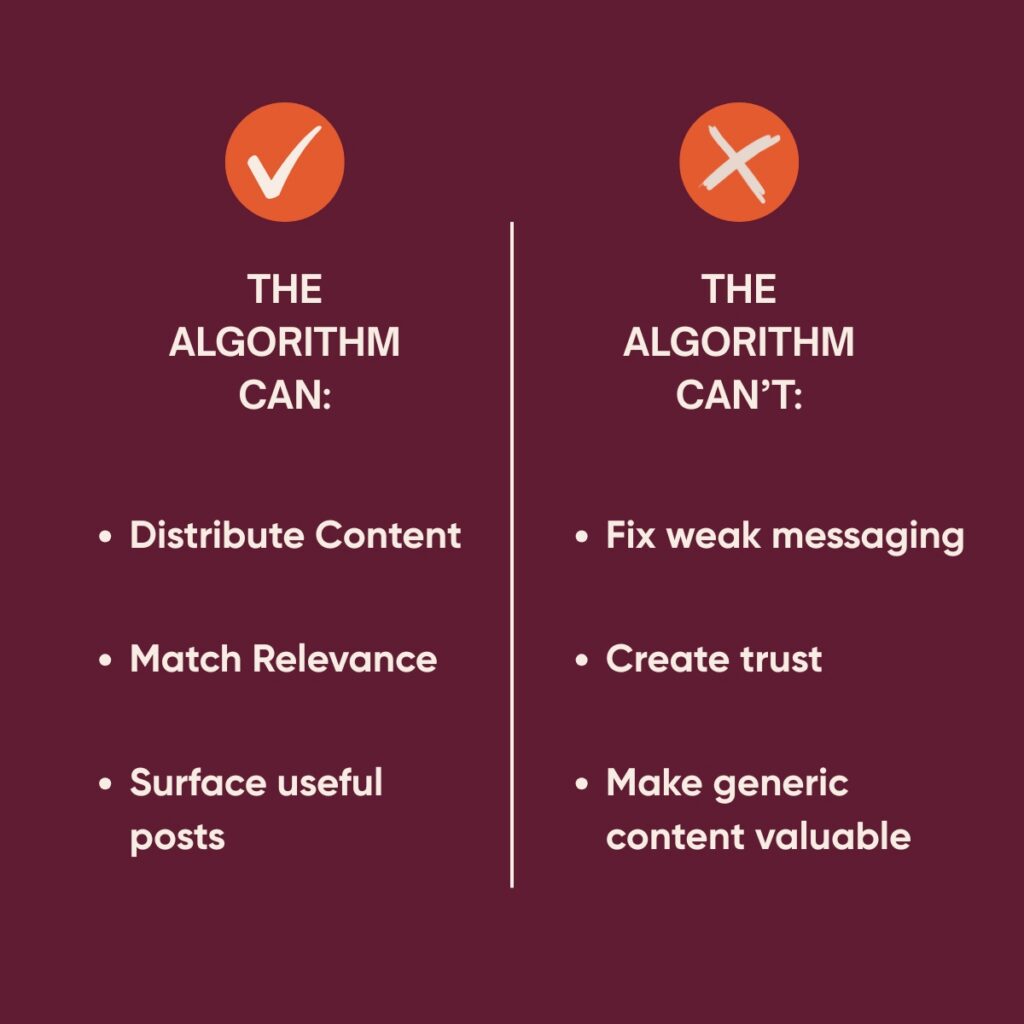
Yes. Social media algorithms affect distribution, discovery and the order in which content appears. They can help the right post reach the right person. But they cannot decide what your business should say. They cannot understand your customers better than your team does. They cannot turn a vague idea into useful expertise. They cannot create a reason for someone to trust you. When content is struggling, the most useful response is not always another platform trick. Look at the message first.
Ask:
- Is it relevant?
- Is it clear?
- Is it specific?
- Is it easy to consume
- Does it offer genuine value?
- Does it support the wider marketing journey?
- Does it give the audience a reason to stop, stay, save or share?
The strongest social media strategies do not ignore the algorithm.
They simply recognise that people come first.
14. Build a social media strategy around your audience
At Wildfire, we help growing businesses turn their knowledge, experience and customer insight into purposeful marketing. That means looking beyond isolated posts and considering how social media connects with your positioning, website, content, email, CRM and sales activity. Because stronger marketing results do not begin with trying to outsmart an algorithm. They begin with understanding what your audience needs and creating something worth paying attention to.
Is your business publishing regularly without seeing a clear return? Chat to Wildfire about building a more connected social media and content strategy.
Frequently asked questions
What is a social media algorithm?
A social media algorithm is a ranking and recommendation system that decides which content is
most likely to be relevant to each user. It uses signals such as previous activity, interests,
relationships and interactions.
Does the Instagram algorithm reduce business reach?
Instagram’s ranking and recommendation systems influence how widely business content is distributed, but low reach can also result from weak audience relevance, unclear positioning, poor retention or content that is not eligible for recommendations.
How can I improve my Instagram reach?
Focus on relevant customer questions, strong opening hooks, specific expertise, clear creative execution, saves, shares and audience retention. Also check your recommendation eligibility and consider how each post encourages profile or website activity.
Do hashtags still matter?
Relevant hashtags can help provide context and categorise content, but they are not a substitute for a strong idea. Use a focused selection that accurately reflects the post, audience and industry.
How often should a business post on social media?
There is no single posting frequency that is right for every business. Choose a sustainable schedule that allows you to maintain relevance, quality and variety. Consistent, purposeful content is more valuable than publishing frequently without a clear reason.
Why is my social media reach suddenly down?
Reach can fall because of changes in audience behaviour, topic relevance, content format, competition, recommendation eligibility, creative quality or platform systems. Review several weeks of results before drawing conclusions from one post.
Should I create content for the algorithm or my audience?
Create content for your audience while understanding how the platform distributes it. Algorithms are designed to predict what users may find relevant, so audience understanding should remain the starting point.